
About Xen Project
A global open source community
Xen (pronounced /’zɛn/) Project has its origins in the ancient Greek term Xenos (ξένος), which can be used to refer to guest-friends whose relationship is constructed under the ritual of xenia (“guest-friendship”), which in term is a wordplay on the idea of guest operating systems as well as a community of developers and users. Learn about the project’s interesting history here.
The community follows a number of principles, including Openness, Transparency, Meritocracy, and Consensus Decision Making.
Find out more about how the community governs itself.
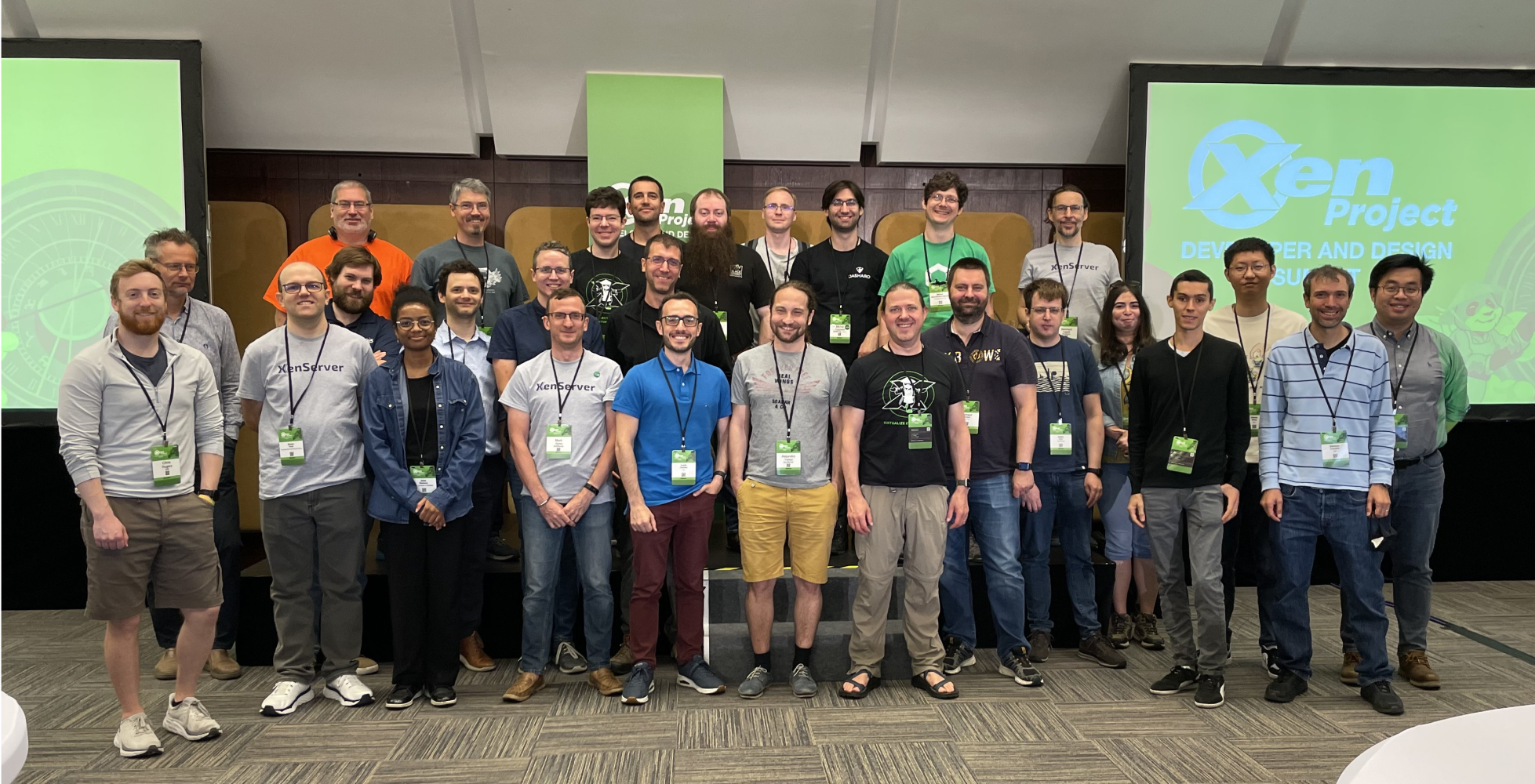
The Xen Project is the home for several virtualization-related open source projects. The community is focused on advancing virtualization in a number of different commercial and open source applications, including server virtualization, Infrastructure as a Services (IaaS), desktop virtualization, security applications, embedded and hardware appliances, and automotive/aviation.
Software hosted on XenProject.org is, and always will be, open source. The code is licensed under the GNU General Public License (GPL2). Our community follows a governance process based on openness, transparency, and meritocracy.
History
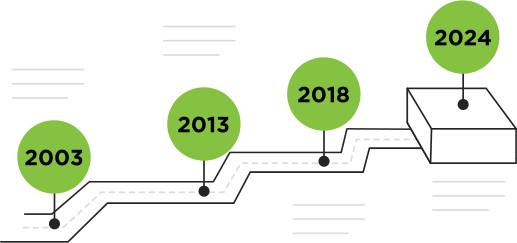
We recently celebrated 20 years in The Xen Project. The timeline shows key milestones over the years, starting from 2003 to the present day in 2024.
Open-source technologies
The Xen Project has created a number of open source technologies for specific purposes:
If you are unsure which technology is right for you, check out our team portals. In addition, read the Xen Overview document to learn about Xen's architecture, components and some of the key choices you will have to make.
- The Xen Project Hypervisor is the open source standard for hardware virtualization and the foundation for all solutions hosted on the Xen Project website. It includes a build configuration for Arm that targets embedded and mobile devices on the Arm architecture.
- Drivers for the Xen Project Hypervisor are delivered with host operating systems such as Linux and BSD distributions. The project maintains Windows drivers, which are developed as part of the Windows PV Drivers project.
- XAPI is a Xen Project toolstack for an enterprise-ready virtualization platforms based on the Xen Hypervisor. XAPI adds further management functionality to Xen and adds many integrations for cloud, storage, and networking solutions. XAPI is used by the Citrix Hypervisor, XCP-ng and Magrana Server.
- The project also hosts a number of Unikernel technologies: Unikraft, which is an SDK to build Unikernel bases; Mirage OS which is a Ocaml based Unikernel.
A Linux Foundation collaborative project
Projects under The Linux Foundation are independently funded software projects that harness the power of collaborative development to fuel innovation across industries and ecosystems. By spreading the collaborative DNA of the largest collaborative software development project in history, The Linux Foundation provides the essential collaborative and organizational framework so project hosts can focus on innovation and results. Linux Foundation Collaborative Projects span the enterprise, mobile, and embedded markets and are backed by many of the largest names in computing.

Governed by Xen project members
Board members can propose and vote upon changes to the Xen Project. Members also gain valuable strategic insight into project plans and future scope.








Latest newsRead all news
Xen 4.22: Strengthening Open Source Virtualization for Cloud, Embedded, and Automotive Systems
Xen 4.22 adds modern hardware support, Arm improvements, continued RISC-V progress, Xenstore scalability updates, and a five-year security support lifecycle.
Xen at FOSDEM: Real-World Conversations About Xen and KVM
We just wrapped up a weekend at FOSDEM 2026 where Xen and XCP-ng both had dedicated booths. This was my first time at FOSDEM and the legend lived up to the hype. It was an insightful weekend full of interesting folks who were genuinely…
OSS Japan 2025: A Breakthrough Year for Open Automotive Innovation
The Xen Project is back from Open Source Summit Japan and Automotive Linux Summit 2025. This year’s event felt like a true watershed moment for the automotive industry and for open source. Across talks, demos, and hallway conversations, one…
🛠️ Engineering Trust: How Xen’s Open CI Powers Global, Hardware-Level Testing
In safety-critical industries like automotive and industrial systems, trust is non-negotiable. When building software that controls critical hardware, like braking systems or factory automation, you need confidence. The software must behave…
🛠️ Xen Summit 2025: Find Your Place in the Future of Virtualization
The annual Xen Summit is right around the corner, and there has never been a more exciting time to be part of the Xen Project. As enterprise and industrial needs shift and proprietary vendors rethink their licensing, the industry is ready…
Let’s Grow Xen Together!
Xen is open, secure, and built for the future. As the new Community Manager, I’m focused on growing the Xen community, welcoming new contributors, and ensuring a thriving ecosystem. Let’s build the future of virtualization together!
Xen Project 4.20: A Step Forward in Open Source Virtualization
The Xen Project has released Xen 4.20 🎉! This release introduces a range of enhancements that further solidify its position as the premier open-source hypervisor. It delivers important security updates, improved performance, and broader…
Xen Project Winter Meetup
We just wrapped up the Xen Winter Meetup 2025. It was an amazing opportunity to push Xen forward in a way that can only happen when people get together in person. Organized by Vates, we hosted it at the University of Grenoble IMAG building,…
Welcome Honda to the Xen Project Board
We're excited to announce our newest Advisory Board Member Honda, to Xen Project. Since its foundation, Honda has been committed to "creating a society that is useful to people" by utilizing its technologies and ideas. Honda also focuses on…
Say hello to our new website
Hello Xen Community, You may have noticed something different... We've refreshed our existing website! Why did we do this? Well, all these new changes are part of an ongoing effort to increase our visibility and make it easier to find…